


Irritability as a Stress Response, Not a Personality Trait
Irritability is often misunderstood as a personality flaw rather than a signal. It is commonly framed as moodiness, impatience, or being “difficult.” When irritability shows up repeatedly, many people begin to internalize it as part of who they are.

When Stress Feels Like Irritability, Shutdown, or “I Can’t Take One More Thing”
Stress does not always look like panic. Stress can look like snapping at someone you love, feeling irritated by small noises, going emotionally flat in the middle of a conversation, or staring at a to-do list with a blank mind. The body is present, but capacity is gone.

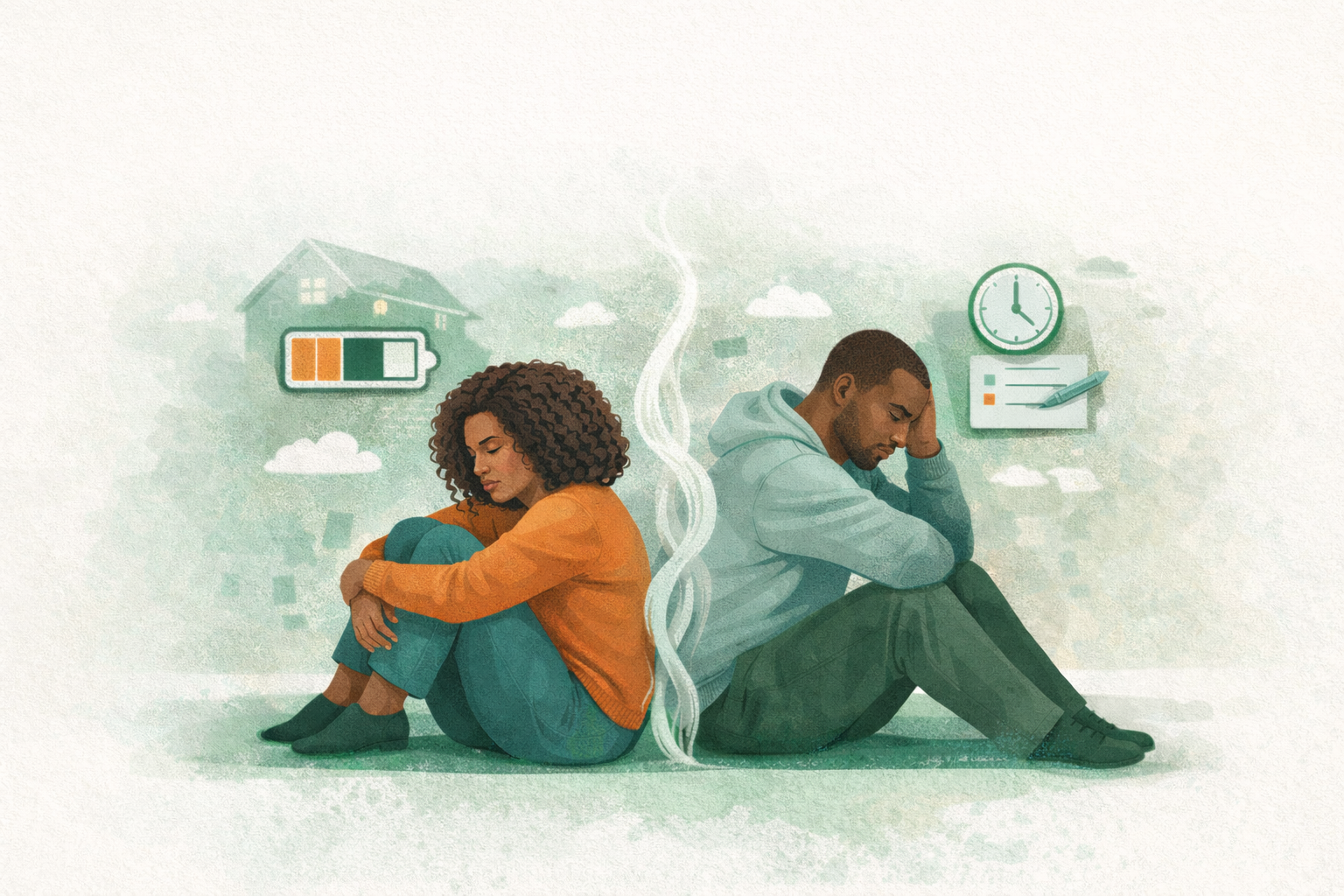
Love, Expectation, and Emotional Exhaustion: Setting Healthier Relationship Rhythms
Love is often assumed to be enough to sustain a relationship. Care, commitment, shared history, and intention are treated as safeguards against burnout. Yet emotional exhaustion can develop even in deeply loving relationships. Partners may feel depleted, irritable, or disconnected without fully understanding why, especially when there is still care and desire to make things work.

Why Relationship Conflict Feels More Intense When You’re Already Overloaded
Relationship conflict often feels personal. When disagreements escalate quickly, linger longer than expected, or leave emotional residue, it is easy to assume something is fundamentally wrong with the relationship itself. Yet conflict rarely exists in isolation. It unfolds within the context of stress, responsibility, emotional load, and capacity.

When Work Stress Follows You Home: How Therapy Helps Create Separation
Work stress rarely ends when the workday does. For many professionals, stress follows them home in subtle but persistent ways—replaying conversations, anticipating tomorrow’s demands, checking messages reflexively, or feeling emotionally unavailable during personal time. Even when work is technically over, the body and mind remain engaged.