


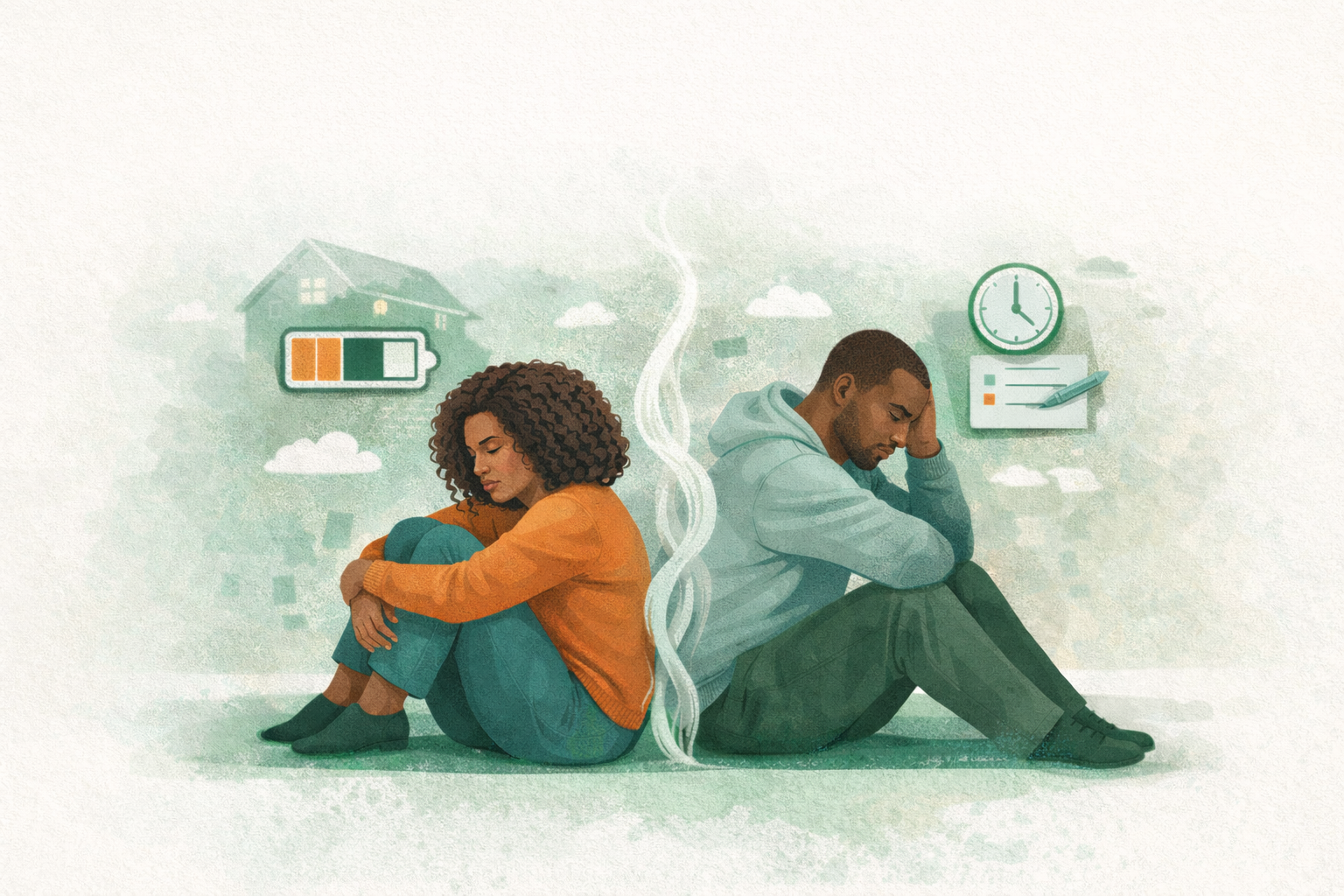
Love, Expectation, and Emotional Exhaustion: Setting Healthier Relationship Rhythms
Love is often assumed to be enough to sustain a relationship. Care, commitment, shared history, and intention are treated as safeguards against burnout. Yet emotional exhaustion can develop even in deeply loving relationships. Partners may feel depleted, irritable, or disconnected without fully understanding why, especially when there is still care and desire to make things work.

Why Relationship Conflict Feels More Intense When You’re Already Overloaded
Relationship conflict often feels personal. When disagreements escalate quickly, linger longer than expected, or leave emotional residue, it is easy to assume something is fundamentally wrong with the relationship itself. Yet conflict rarely exists in isolation. It unfolds within the context of stress, responsibility, emotional load, and capacity.

When Work Stress Follows You Home: How Therapy Helps Create Separation
Work stress rarely ends when the workday does. For many professionals, stress follows them home in subtle but persistent ways—replaying conversations, anticipating tomorrow’s demands, checking messages reflexively, or feeling emotionally unavailable during personal time. Even when work is technically over, the body and mind remain engaged.

Workplace Drama and Emotional Labor: Knowing What’s Yours to Carry
Workplace drama is often described as personality conflict, poor communication, or organizational dysfunction. What is discussed less frequently is the emotional labor underneath it—the invisible work of managing feelings, smoothing tension, anticipating reactions, and absorbing stress that does not formally belong to one’s role.

Why Gentle Parenting Feels Hard When You’re Burned Out
Gentle parenting is often described as patient, calm, emotionally attuned, and grounded in connection. For parents experiencing burnout, these qualities can feel painfully out of reach. Instead of responding with curiosity, reactions come quickly. Instead of calm explanations, there is exhaustion, frustration, or shutdown. This gap between intention and reality often leads to guilt and self-doubt.