

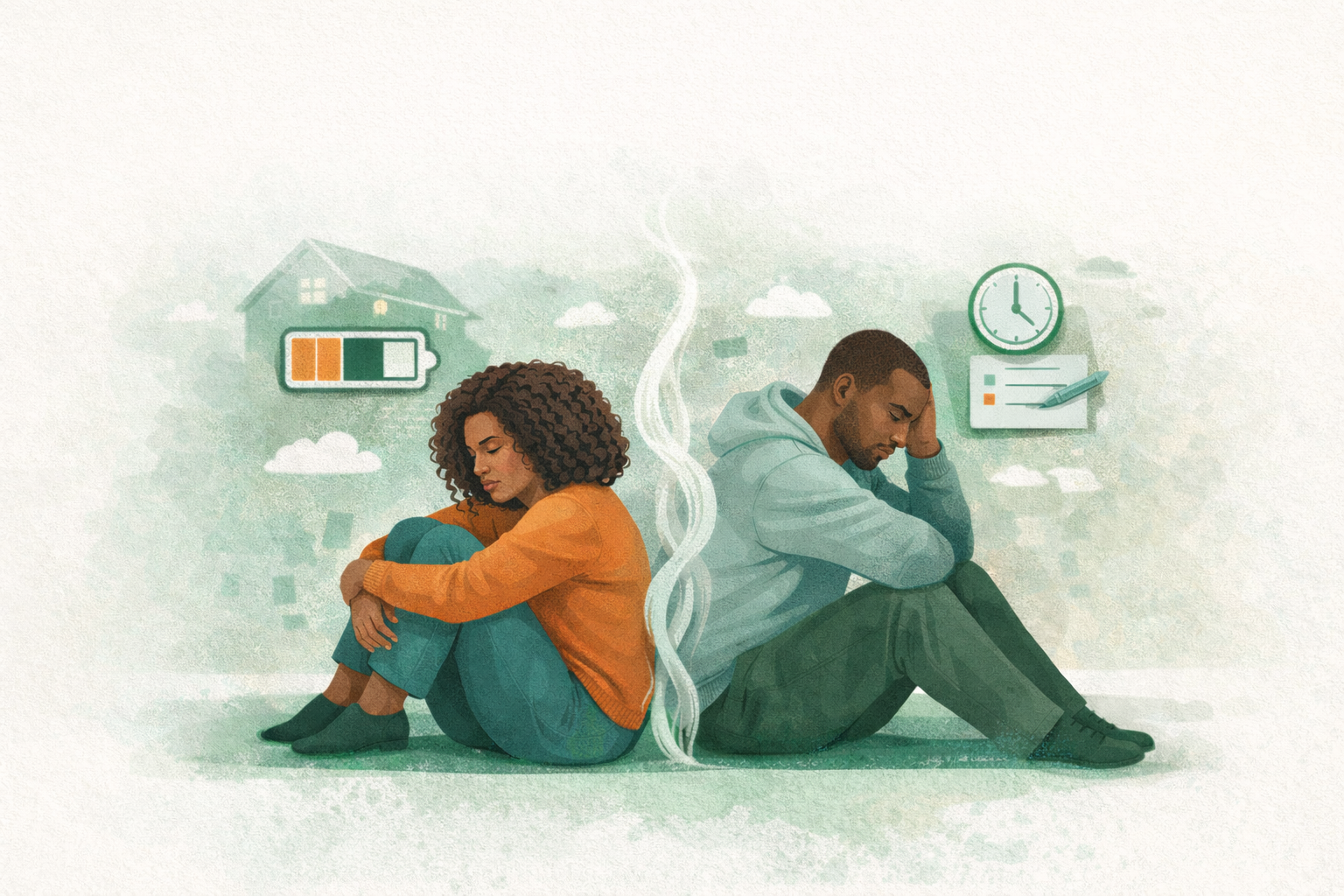
Love, Expectation, and Emotional Exhaustion: Setting Healthier Relationship Rhythms
Love is often assumed to be enough to sustain a relationship. Care, commitment, shared history, and intention are treated as safeguards against burnout. Yet emotional exhaustion can develop even in deeply loving relationships. Partners may feel depleted, irritable, or disconnected without fully understanding why, especially when there is still care and desire to make things work.

Why Gentle Parenting Feels Hard When You’re Burned Out
Gentle parenting is often described as patient, calm, emotionally attuned, and grounded in connection. For parents experiencing burnout, these qualities can feel painfully out of reach. Instead of responding with curiosity, reactions come quickly. Instead of calm explanations, there is exhaustion, frustration, or shutdown. This gap between intention and reality often leads to guilt and self-doubt.

Learning to Receive Support Without Guilt
Receiving support can feel surprisingly difficult. Even when help is offered freely, guilt, discomfort, or the urge to minimize needs often arise. For individuals accustomed to giving, receiving may feel unfamiliar—or even unsafe.

Why You Feel Responsible for Other People’s Emotions
Feeling responsible for other people’s emotions often begins quietly. It shows up as the urge to smooth tension before it escalates, to anticipate reactions, to prevent disappointment, or to manage how others feel so things don’t fall apart. Over time, this responsibility can feel less like a behavior and more like a core part of identity—something that feels impossible to set down without guilt or fear.

Stress and Sleep: Why Rest Can Feel Impossible Even When You’re Exhausted
The most frustrating kind of tired often shows up at night. The day ends, the body finally has permission to rest, and instead of sleep there’s a wired mind, a tense chest, a clenched jaw, or a sudden urge to scroll—anything but stillness. Exhaustion is present, but rest feels out of reach.

Early Body Signals of Stress People Often Overlook
Stress rarely announces itself loudly at first. It often arrives quietly—through a tight jaw you do not notice until it aches, a shallow breath held longer than intended, or a fatigue that lingers even after rest. These early body signals are easy to dismiss because they do not disrupt productivity. Responsibilities are still met, routines continue, and from the outside, everything appears manageable.