

How Stress Can Show Up in the Body (Even When You’re “Managing”)
Many people believe that if they’re functioning — going to work, caring for family, meeting responsibilities — then stress must be under control. On the surface, life may appear managed. Bills are paid, routines are maintained, and emotions are kept in check. Yet for many individuals, especially those navigating chronic stress, trauma, or systemic pressures, the body tells a different story.
Unexplained headaches, persistent muscle tension, digestive discomfort, fatigue, shallow breathing, or sleep problems often emerge even when someone feels they’re “handling things.” These physical stress signs can feel confusing or frustrating, particularly when there’s no clear medical explanation.
Stress isn’t just mental; it’s experienced through the nervous system, muscles, hormones, and internal organs. Understanding how stress manifests in the body is a key step toward meaningful, holistic mental health care — especially for communities with cumulative stress exposure. Research shows stress affects all major body systems, including musculoskeletal, respiratory, cardiovascular, endocrine, and digestive systems.
Therapy doesn’t diagnose physical illness or promise symptom removal. Instead, it offers a safe space to understand stress patterns, the mind-body connection, and how emotional experiences can be physically carried over time.
Why Stress Is More Than Mental
Stress is often framed as psychological — worry, overwhelm, anxiety, or racing thoughts. While these experiences are real, stress fundamentally involves a whole-body response. When the nervous system perceives threat or prolonged demand, survival systems activate:
Heart rate and blood pressure increase
Muscles tense
Digestion changes
Breathing alters
Hormones shift toward alertness
These reactions are adaptive responses meant to help the body cope. Problems arise when the stress response remains activated for long periods without adequate recovery. Chronic stress can contribute to long-term health effects — such as high blood pressure, increased arterial plaque formation, and changes in brain structure related to anxiety and depression.
Common Physical Signs of Stress
Stress can vary across individuals, but commonly reported physical signs include:
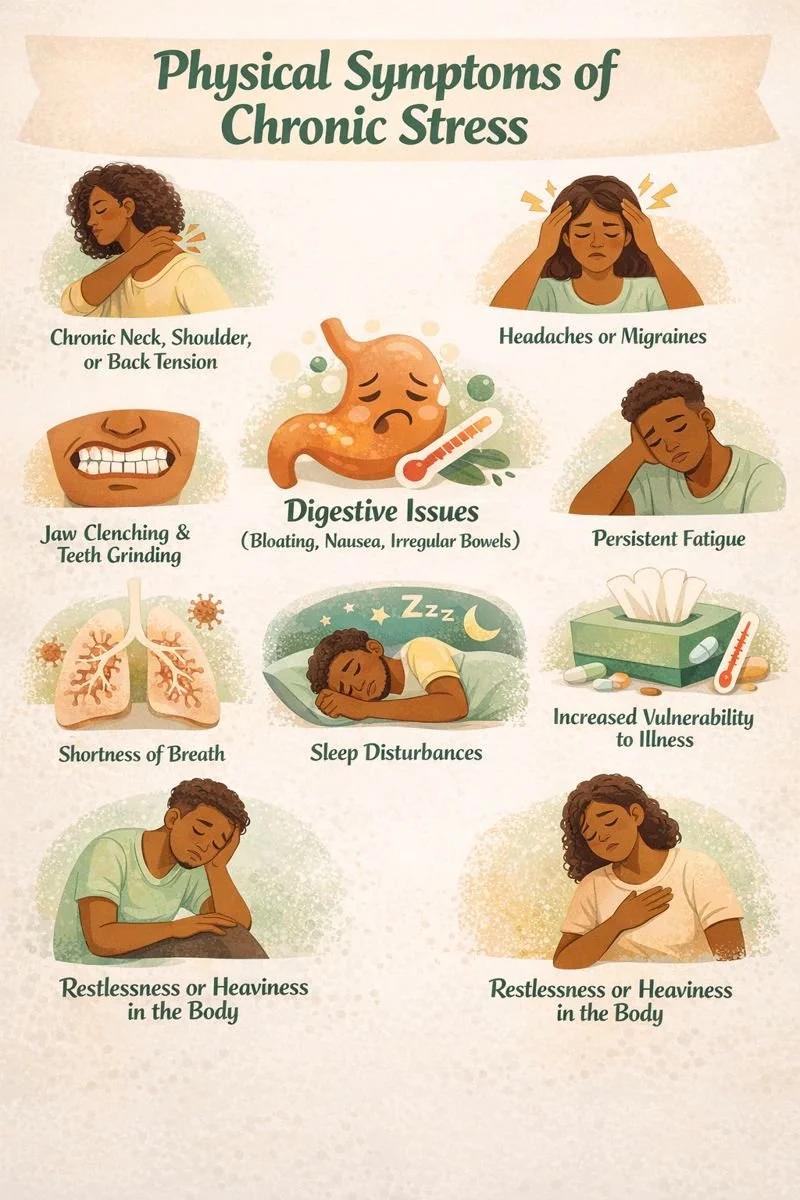
These physical experiences often prompt people to wonder whether something is “wrong” medically. While medical evaluation is important, therapy focuses on how stress interacts with the body rather than providing medical diagnosis. Research indicates chronic stress may weaken the immune system and slow recovery from illness.
“But I’m Coping” — Why the Body Still Reacts
Many individuals develop powerful coping strategies: pushing through discomfort, suppressing emotion, and remaining productive under pressure. These strategies are often necessary adaptations — especially within marginalized communities where vulnerability feels risky.
However, coping doesn’t always equal processing.
When emotions are contained rather than integrated, the nervous system may continue carrying the load. The body doesn’t distinguish between emotional stress and physical threat — it responds to both through activation. This is why physical stress symptoms can persist even when someone believes they’re managing.
The concept of allostatic load describes the cumulative “wear and tear” on the body from prolonged stress activation. Over time, repeated stress responses can strain systems throughout the body.
The Mind-Body Connection in Stress
The “mind-body connection” refers to ongoing communication between emotional experiences, thoughts, and physical sensations. Stress strengthens this connection by reinforcing survival patterns that prioritize vigilance over relaxation.
For example:
Long-term worry can reinforce muscle tension
Emotional suppression contributes to shallow breathing
Hypervigilance disrupts digestion
Chronic stress reduces the body’s ability to return to baseline
Therapy helps individuals notice these patterns without judgment — fostering curiosity over fear. Research in psychoneuroimmunology shows how chronic stress can impair immune function and raise susceptibility to infections and inflammation, underscoring the importance of mind-body approaches in care.
Stress and the Nervous System
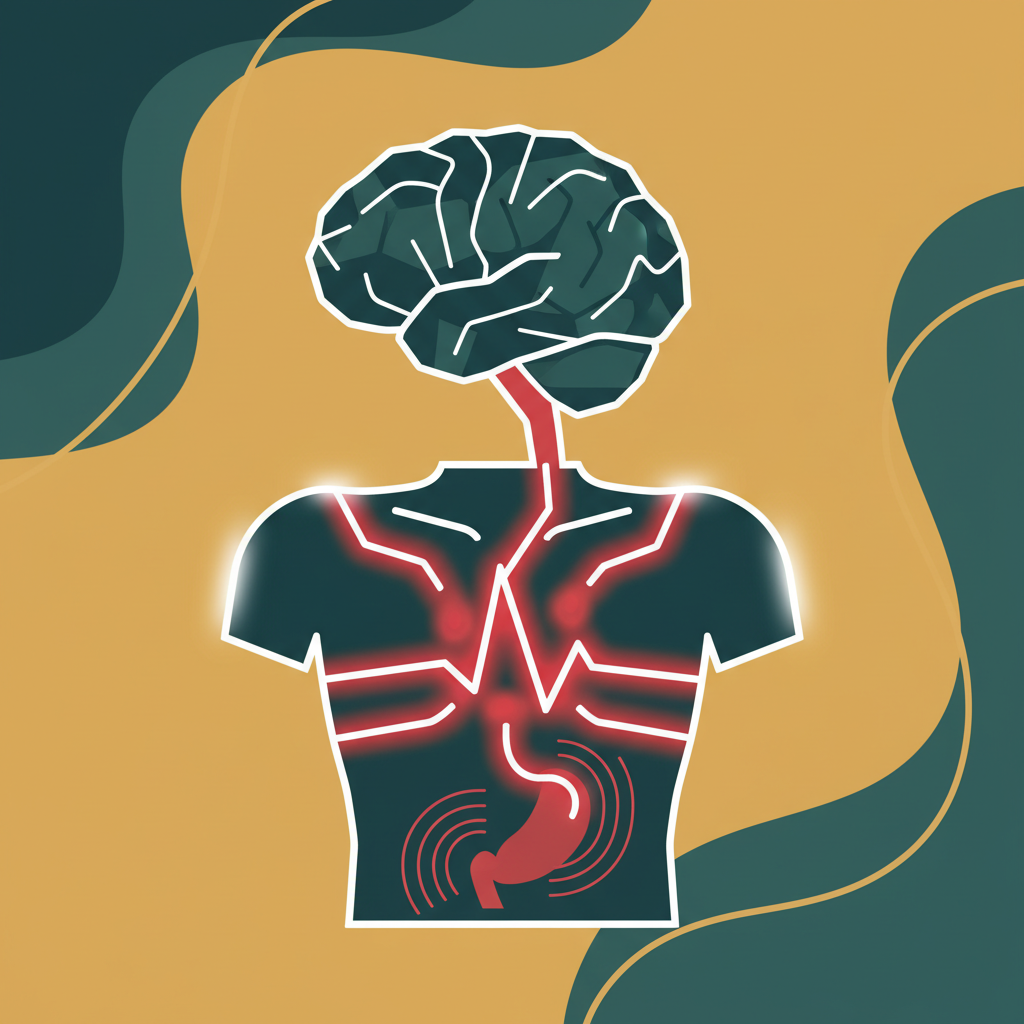
At the core of the stress response is the nervous system. When repeatedly activated, it can remain in a state of readiness even during calm moments. This can make relaxation feel unfamiliar or uncomfortable.
At the core of the stress response is the nervous system. When repeatedly activated, it can remain in a state of readiness even during calm moments. This can make relaxation feel unfamiliar or uncomfortable.
Some people notice:
Difficulty slowing down
Feeling “on edge” without clear cause
Discomfort with stillness or silence
Sensitivity to noise or emotional stimuli
These experiences aren’t signs of failure. They reflect nervous system adaptations to prolonged demand. Therapy supports gradual recognition and regulation of these patterns.
Stress in Black Communities and Communities of Color
Stress doesn’t occur in isolation; social systems matter. For many Black individuals and people of color, stress exposure includes personal challenges and systemic pressures, such as:
Racial discrimination and microaggressions
Intergenerational trauma
Economic instability
Caregiving demands
Workplace inequities
Barriers to culturally responsive care
Over time, these stressors can accumulate physically, even when they’re normalized or minimized. Therapy with culturally attuned clinicians can validate lived realities rather than overlook them. Support that prioritizes safety, context, and validation acknowledges stress responses as adaptive reactions to ongoing demand.
Emotional Awareness Can Heighten Sensation
An unexpected part of therapy is that increased emotional awareness can initially intensify physical sensation. As clients become more attuned to their internal experience, they may notice tension, fatigue, or discomfort more clearly.
This doesn’t mean stress is increasing. It means awareness is expanding. Therapy helps clients:
Differentiate between danger and sensation
Build tolerance for bodily awareness
Develop language for physical experiences
Respond with regulation rather than avoidance
Over time, these shifts support healthier patterns of rest, boundaries, and emotional processing.
Therapy Helps You Understand Patterns

Therapy does not replace medical care, diagnose physical conditions, or promise symptom resolution. Instead, therapy offers a framework for understanding how stress patterns form and how they are embodied. Through therapy, individuals can:
Therapy does not replace medical care, diagnose physical conditions, or promise symptom resolution. Instead, therapy offers a framework for understanding how stress patterns form and how they are embodied. Through therapy, individuals can:
Notice when physical symptoms emerge
Identify stressors activating bodily responses
Understand historical patterns influencing current reactions
Learn skills that support nervous system regulation
Build self-compassion around stress responses
This understanding empowers people to make informed choices while collaborating with other healthcare providers as needed.
Why This Understanding Matters
When stress shows up physically without explanation, it’s easy to feel dismissed or disconnected from oneself. Recognizing that stress can manifest physically — even when coping seems strong — reduces shame and supports compassionate care. This approach:
Normalizes physical responses to emotional stress
Encourages holistic support
Reduces self-blame
Fosters long-term wellbeing over quick fixes
Understanding stress as a whole-body experience opens space for healing with patience, context, and care.
Reflection Prompts
What physical sensations tend to show up during stressful periods?
How were you taught to cope with stress growing up?
In what ways might your body be communicating needs you’ve overlooked?
Your Next Step
At SHIFT Your Journey Mental Health Counseling, therapy is a collaborative, trauma-informed space to explore stress safely — without diagnosis, pressure, or unrealistic promises. We work with individuals seeking support from Black therapists, Spanish-speaking therapists, and therapists of color who understand the lived realities of the communities we serve.
If stress has been showing up in your body and you want support understanding it with care and context, therapy may be a meaningful next step.
📞 914-221-3200
📧 Hello@shiftyourjourney.com
🌐 www.shiftyourjourney.com